

The Likely Reason Why Apple Stopped Making Wi-Fi Routers
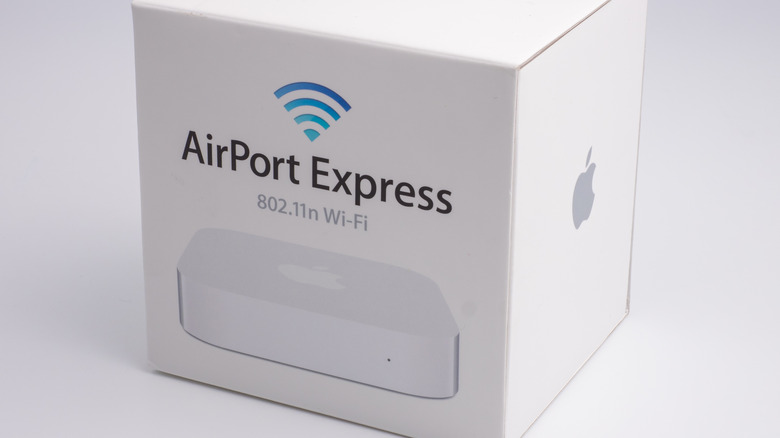
Before the iPhone, Apple had a brand of wireless routers, called AirPort. Launched in 2003, Apple suddenly disbanded its AirPort team in 2016, before completely killing off the brand just two years later. Since then, there's been zero indication that Apple wants to step back into the mesh router rodeo, and the real reason why they did this? If you guessed "money," you get a gold star.
Speaking to Bloomberg's Mark Gurman at the time, Apple confirmed the move was for the company to refocus on "consumer products that generate the bulk of its revenue." Apple was actually experiencing a moment of weakness in 2016, as it saw profits fall for the first time since 2001. iPhone sales were down, and overall, it sold 8% less than 2015. It would begin an upswing in 2017, with the rejuvenation of the iPhone with the iPhone X and iPad Pro models hitting shelves.
AirPort routers were well liked by users who owned them, but as Apple let the hardware languish, other brands began to supersede them. This was especially true when it comes down to gigabit connections and modern Wi-Fi standards, which allow for far faster speeds and traffic on the network. However, AirPort functioned as a multi-layered network device in later models, with the AirPort Extreme being able to operate as a network-attached storage (NAS) device, or the Time Capsule, which provided an internal hard drive and network-wide backups.
Users save AirPort Time Capsule from abandonment
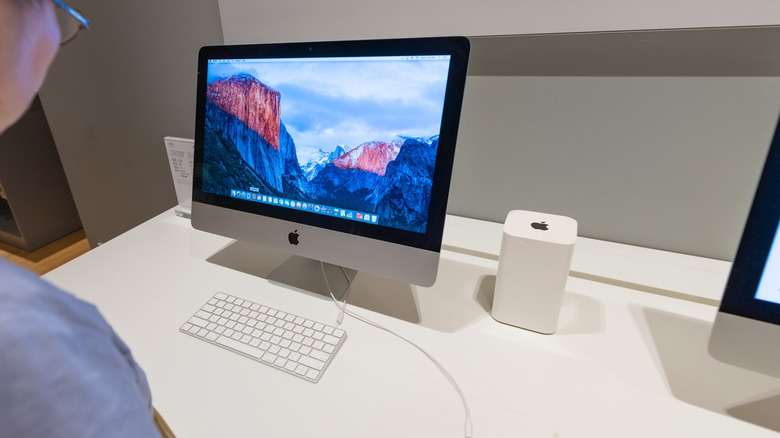
As we mentioned above, these older AirPort routers have aged out a bit now in terms of performance. They can be found for between $20 and $100 online, depending on the condition, but shouldn't be used as your central wireless system. The last potential useful functionality, Time Capsule, had its support removed in macOS 27's version of Time Machine backup, so it now won't work with the hardware.
For those who are still clinging to their AirPort hardware, particularly the Time Capsule, there's now TimeCapsuleSMB, which brings up-to-date versions of Samba back to the table. Samba is the protocol behind SMB server connections, often used on NAS devices, and the Time Capsule really only supports Apple's now deprecated protocol and SMB1, which Apple dropped support for years ago. The routers should still work as intended, but once again, it's old hardware that you can do much better than at this point.
Apple might be out of the network router game, but not entirely out of the networking game. It has begun to give the boot to other cellular modem providers like Qualcomm, as it did with Intel and its processors, opting to use its own. The iPhone Duo and 18 Pro will feature the C2, its third cell modem, and the N1 chip, providing Bluetooth, Wi-Fi, and interconnectivity through Thread radio.